Most orders received by SUCRECUBE Japon start with a referral from someone who has seen our installations. Even a referred project is then decided by a formal tender or evaluation. For the 147 units for The Gambia, UNICEF visited equipped schools in Senegal and reviewed the file before signing. We do not change this order. Show the results, then be selected through the evaluation. That is why we have set out a procedure for each type of buyer.
Three routes, by buyer
International organisations and donors. SUCRECUBE Japon is a registered vendor on the UNGM (United Nations Global Marketplace). We respond to invitations to bid (ITB) and requests for quotation (RFQ) in English and French. The contract is held by the Japanese company. Delivery and training in the field are carried out by the Senegalese subsidiary, TUMIQUI JAPON SASU. Our proposals include training and maintenance after delivery, so that the work does not stop at installation.
Governments and local authorities. In Senegal, we signed memoranda of understanding with the Ministry of Health, the Ministry of National Education and the Ministry of Industry and Commerce, and began with small deployments. Once results were obtained in schools and health posts, deployment expanded with public or international funding. This sequence led to the deployments with Senegal’s Ministry of Education and then to the UNICEF order for The Gambia. We also take part in programmes run by Japanese ministries (Internal Affairs and Communications, Agriculture, JICA).
Companies. There are three entry points: CSR, pilot projects and co-creation. Under a pilot project supported by a grant from Japan’s Ministry of Economy, Trade and Industry, we ran a trial of solar cold storage, food processing and a digital kiosk in Senegal. We also test other companies’ products in the field. The pairing of a Seiko Epson printer with the TUMIQUI Smart Kit is being tested in health posts in Casamance. A company that wants to check whether its product works in the field in Africa will find sites and technicians on the ground with us.
From first enquiry to maintenance
| Step | What happens |
|---|---|
| 1. Enquiry | Number of units, intended use, region and site conditions. Through the contact form, in English, French or Japanese |
| 2. Site survey | Sunlight, location, road access and existing equipment. In Senegal and neighbouring countries by the local subsidiary. Elsewhere by a field mission |
| 3. Design and quotation | Equipment configuration, quantities and delivery schedule. Whether grants or public funding can be used is examined at this step |
| 4. Delivery | Receipt of equipment in Senegal or in the destination country, customs clearance and transport. Fixed installations are set up by our technicians on site |
| 5. Training | For the users: teachers in schools, nurses in health posts, the cooperative or group running a cold storage site |
| 6. Maintenance | Carried out on site by technicians based in Senegal. For sites with remote monitoring, temperature and solar output are followed from Japan and Dakar |
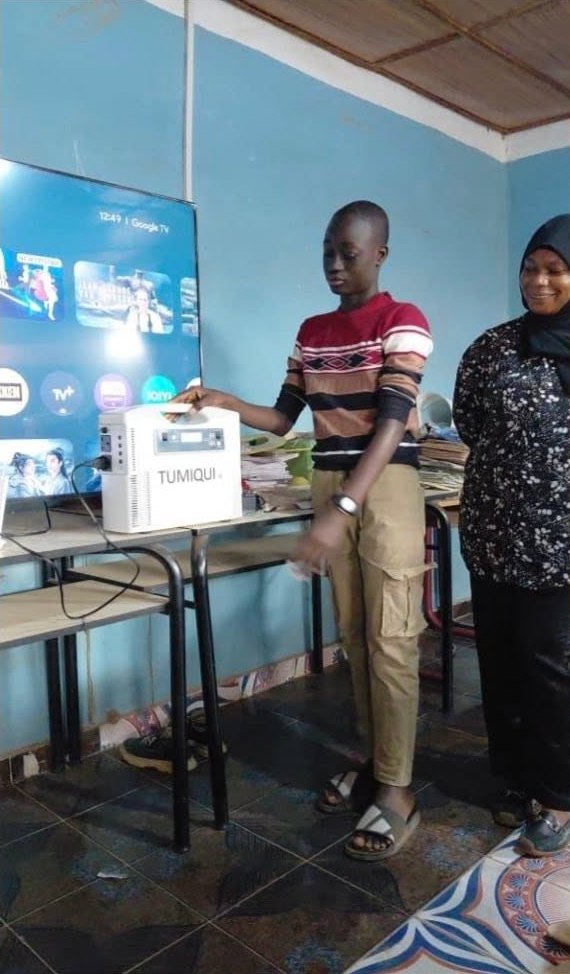
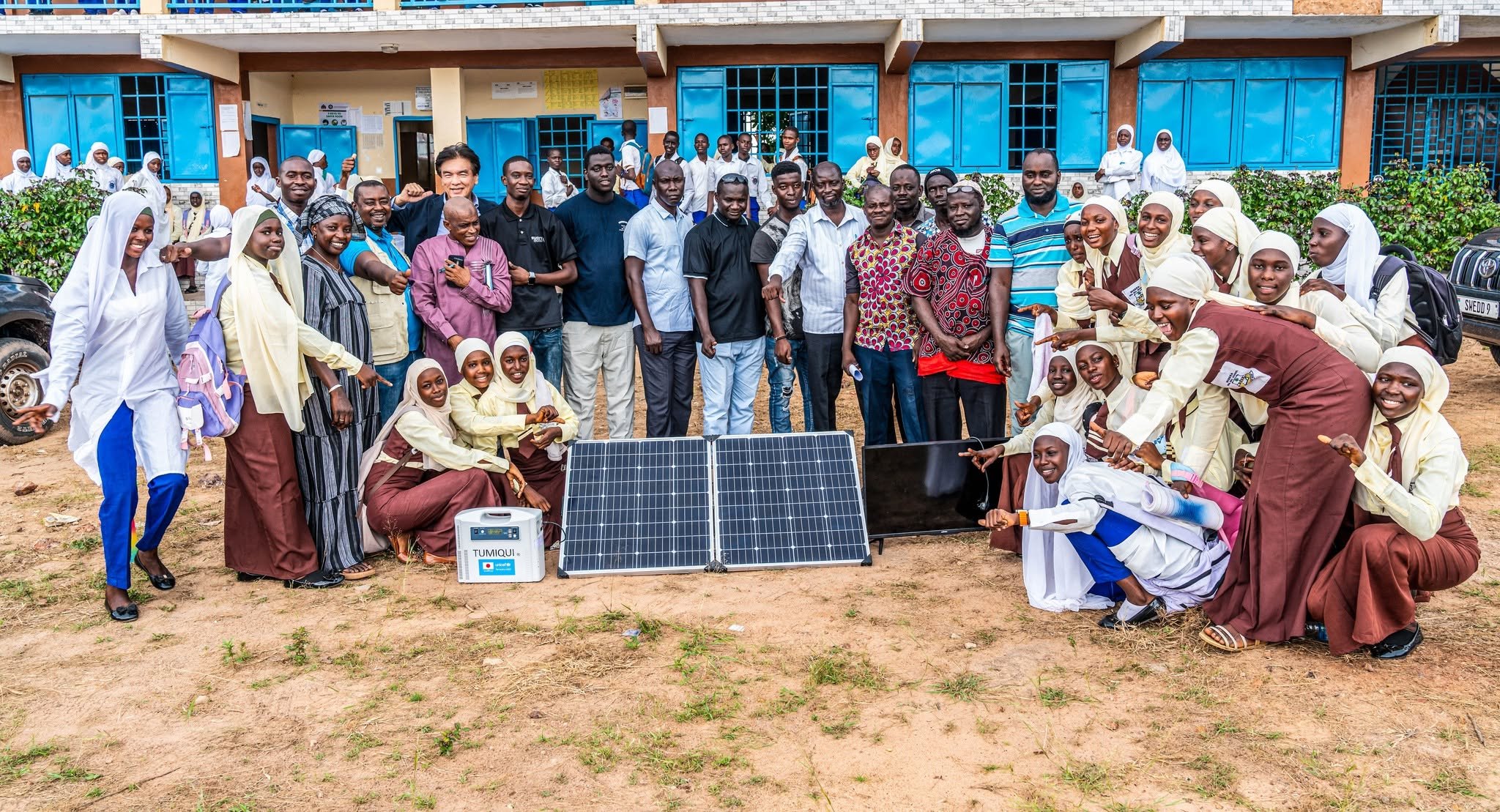
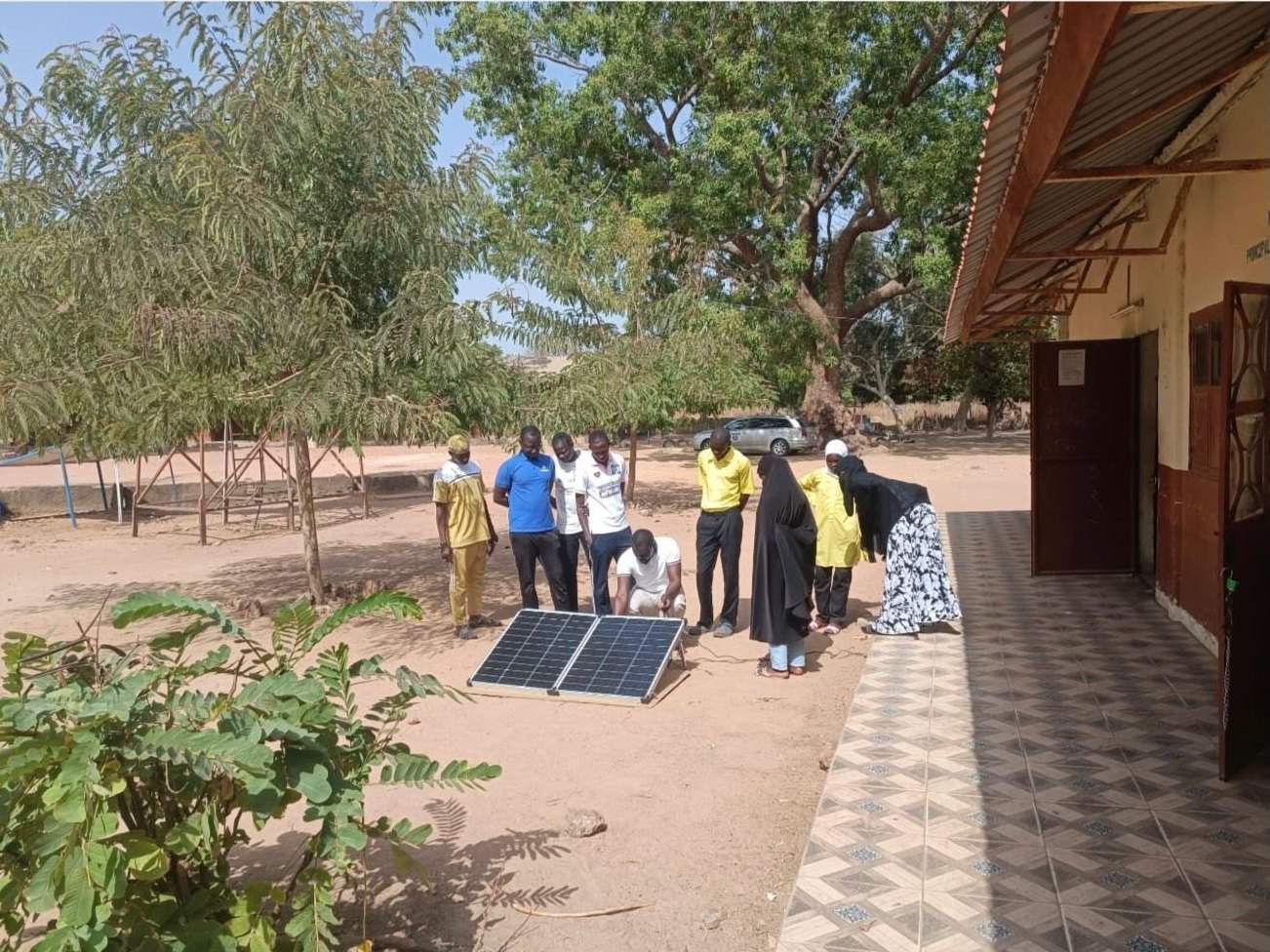
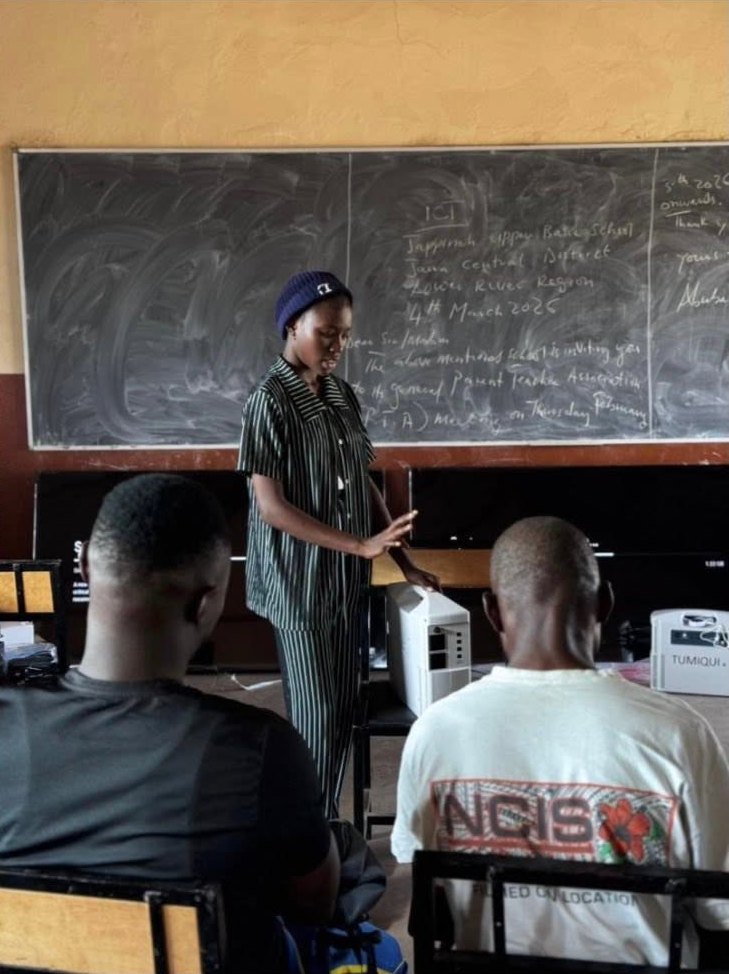
For the UNICEF project in The Gambia, delivery to the 122 schools took two days, and training, three hours per school, took eight days. From transport to training, everything was arranged by the SUCRECUBE Japon team. In October 2025, UNICEF Gambia, the Ministry of Basic and Secondary Education (MoBSE) and SUCRECUBE Japon met and then visited two schools in the Lower River Region to discuss how to use the equipment with pupils, teachers and the community. UNICEF Gambia wrote about the project: “Together, we’re committed to ensuring no child is left behind.” The photo at the top of this page was taken at one of the schools visited (photo: UNICEF Gambia).
Frequently asked questions
What is the lead time? It depends on the project: the number of units, the configuration, the destination country and the customs procedure. A delivery schedule is provided at the enquiry stage.
What is the warranty? The TUMIQUI Smart Kit carries a one-year warranty from purchase. For cold storage containers and processing equipment, whose configuration varies, the scope and length of the warranty are set in each contract.
Who carries out maintenance? In Senegal, the technicians of our wholly owned subsidiary TUMIQUI JAPON SASU, on site. In neighbouring countries, a local partner and our field missions. We do not do maintenance from across the sea.
What are the payment terms? They are discussed case by case, because the procedures differ between international organisations, governments and companies.
Which languages do you work in? English, French and Japanese, for proposals, contracts, training and maintenance follow-up.
Next step
Please tell us three things: the number of units, the intended use and the region. We will propose an equipment configuration and a schedule through to delivery.
Request a quoteMaintenance and operationFrequently asked questions