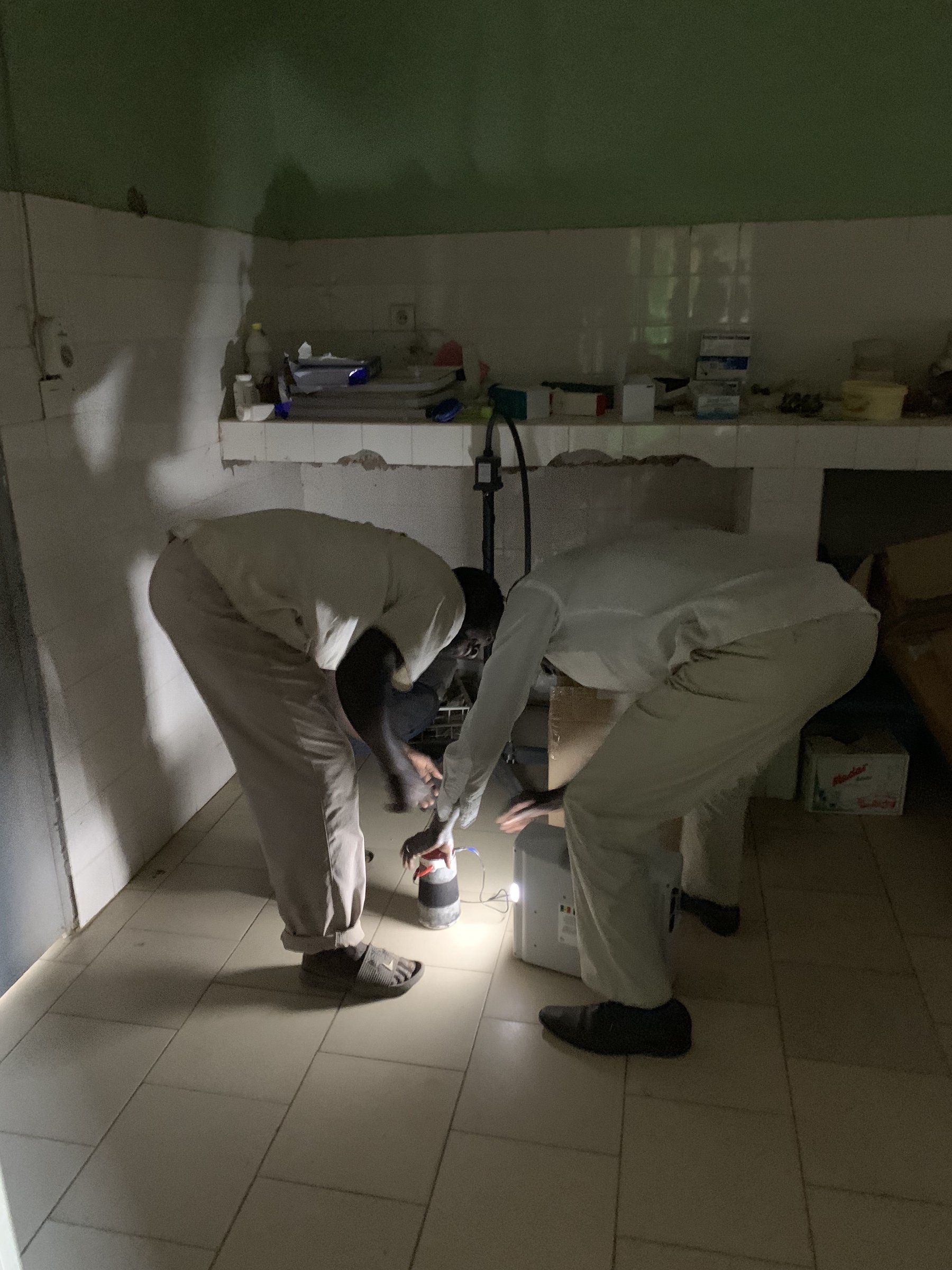
Much equipment delivered through foreign aid stops within a year of installation and stays stopped. There is nobody nearby to repair it. SUCRECUBE Japon brought electricity to its first health post in Senegal in 2019, and set up in Senegal in January 2020. The reason was to make sure the work did not end at installation.
How maintenance is organised
| Who | Role |
|---|---|
| The Senegalese subsidiary TUMIQUI JAPON SASU | A wholly owned subsidiary based in Sandiara. Its technicians carry out installation and maintenance |
| Remote monitoring | Temperature, solar output and battery charge level at the cold storage sites are watched from Dakar and from Japan. If something goes wrong, a local technician goes to the site |
| Head office in Japan | Choice of equipment, supply of parts, decisions on design changes |
Every hour of downtime is an hour without lessons and without consultations. Maintenance is carried out from Senegal, not from across the sea.
Years in service
The TUMIQUI Smart Kit has been in service for more than five years in the heat, humidity and dust of West Africa. The two solar cold storage sites in Sandiara run 24 hours a day on solar power and batteries alone. When equipment stops, the cause is traced on site, the part is replaced, and the lesson is built into the next batch of equipment. The increase in battery capacity started with a request from the field.
Remote monitoring
At the cold storage sites, temperature, solar output and battery charge level are measured. The management site in Dakar and the office in Japan see the same screen. If the temperature rises, it is known without anyone being there. Rather than wait for a call, SUCRECUBE Japon spots the problem and sends the technician. The system was developed during a network trial run in 2021 and 2022 at five schools in Sandiara.
The KIOSK: making the site part of daily life
A facility that only provides cold storage becomes an empty box when the project ends. SUCRECUBE Japon added a KIOSK to the Sandiara cold storage site. It is a small building with electricity and connectivity. People charge their phones, print and copy documents, receive local information and buy cold drinks. Everything runs on solar power.
The first customer during the trial was a secondary school pupil on his way home. It was 45 degrees outside. He walked in and said: “I am thirsty, please give me a drink.” Cold water and juice have sold every day since. A facility lasts when it becomes a place people use every day.
How maintenance contracts work
Delivered equipment is covered by a warranty (one year from purchase for the TUMIQUI Smart Kit). After the warranty, a maintenance contract takes over. It covers scheduled inspections, remote monitoring, on-site response to breakdowns and the supply of parts. For facilities, the local subsidiary can also take on the operation itself. The type of maintenance contract and the warranty period for facilities are set contract by contract. Terms are quoted individually, according to the number of units, the sites and the response time required.
Maintenance contacts in Senegal are listed on the subsidiary’s website (tumiqui.com).