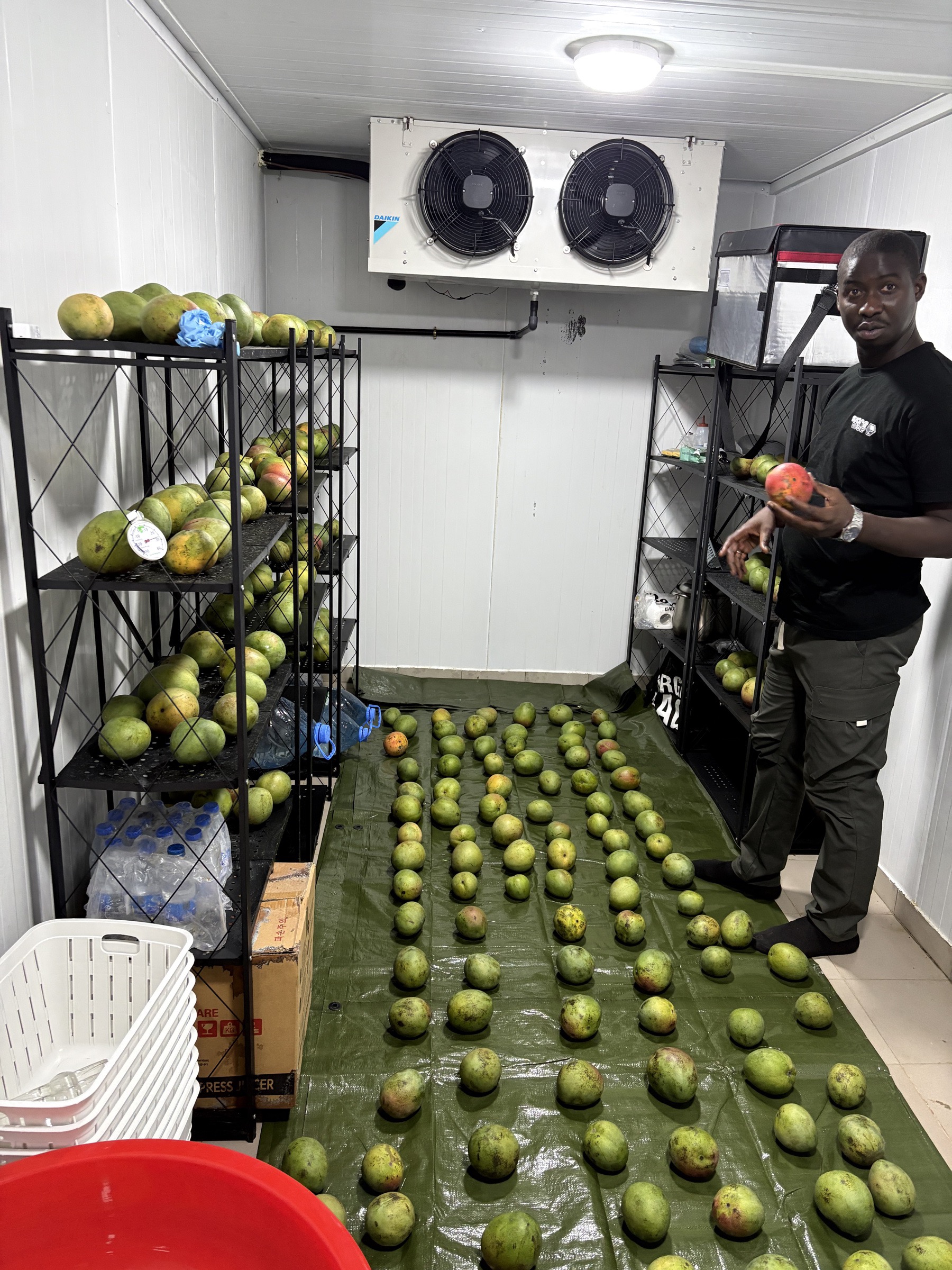
In Senegal, an estimated 50,000 tonnes of mangoes are lost every year. The fruit ripens all at once between May and August, and there is nowhere to keep it cool. Without electricity in the village there is no cold room. Without a cold room, the fruit rots under the tree.
SUCRECUBE Japon builds cold stores that work in those villages. Solar panels and batteries produce the electricity, which cools an insulated container. No grid connection is needed. Two sites have been built in Sandiara, Senegal. Both run day and night on solar power and batteries alone.
Product range
The equipment running at the two Sandiara sites is sold as it is. The configuration is adapted to the site. The price depends on the configuration and is quoted individually.
Solar cold storage container, 40 ft (Site A type)
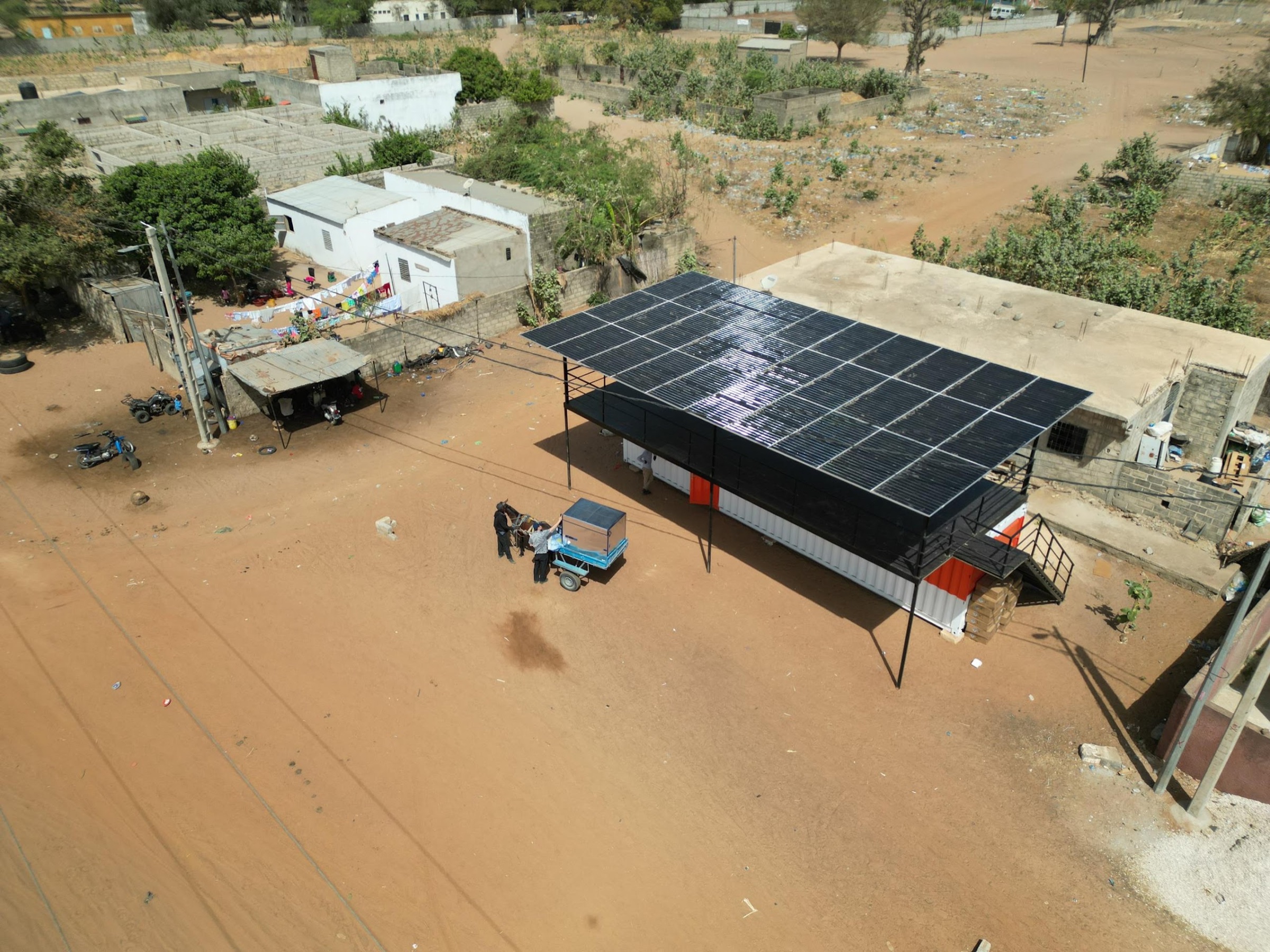
Keep the harvest cool, at the market or in the growing area.
| Component | Content |
|---|---|
| Container | One 40-foot container |
| Solar | 21 kW |
| Cold room | 22 m³ |
| Temperature | 2 to 8 °C |
| Power supply | Solar and batteries only, with no grid and no generator |
| Refrigeration unit | Daikin inverter unit |
In operation: Site A, Sandiara, Senegal. Commissioned in 2026, it has kept the room cold around the clock. Consumption is about 15 kWh a day.
For whom: farmers’ cooperatives, markets, local authorities, international organisations
Request a quoteRequest a site visit
Solar cold storage, freezer and processing site (Site B type)
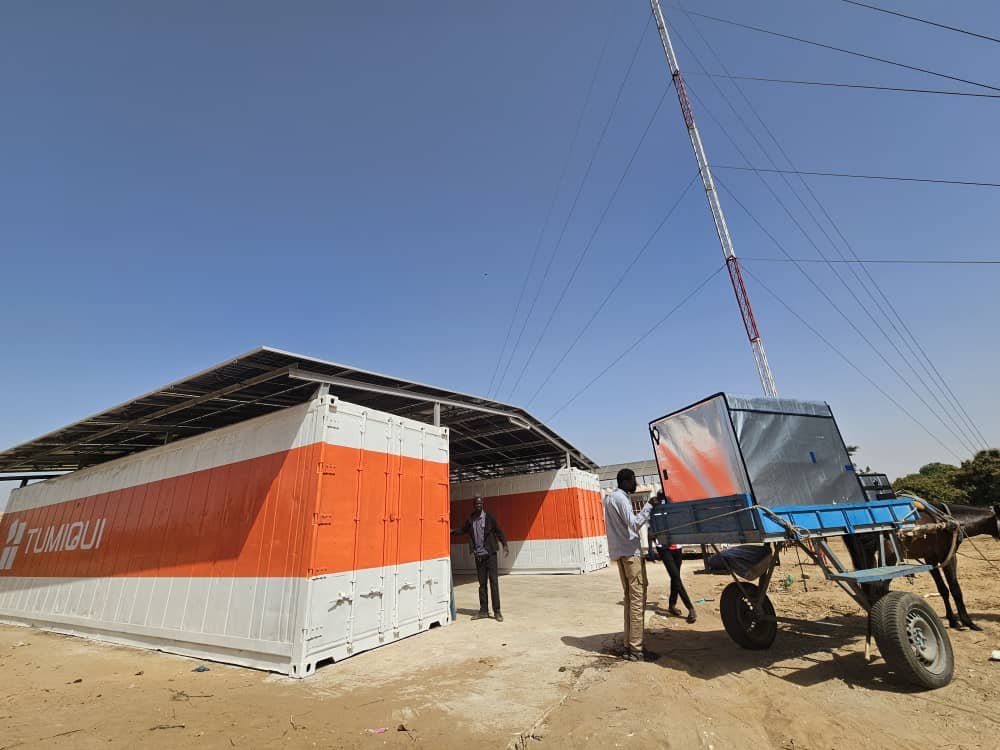
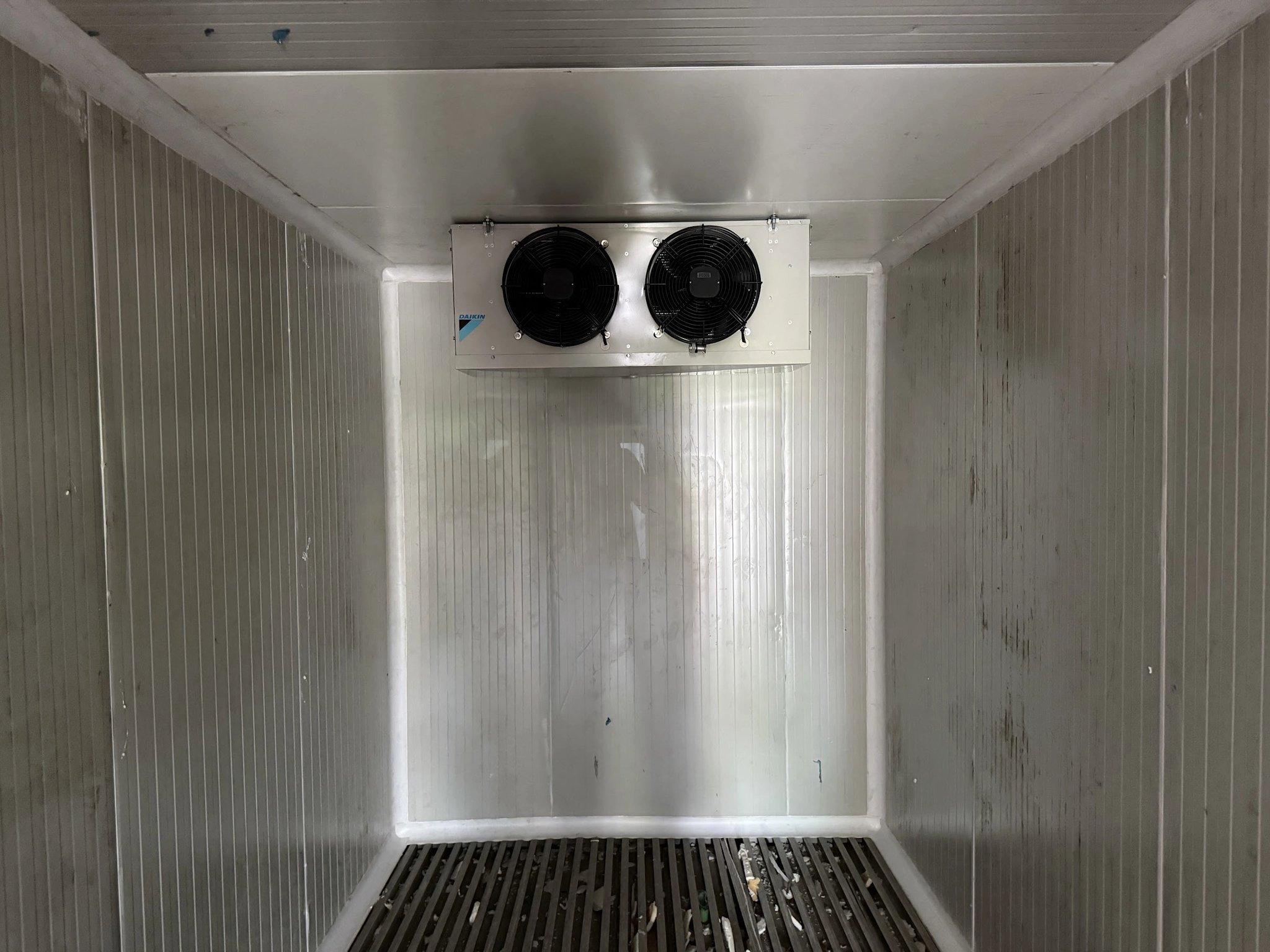
Chilled storage, plus a freezer to keep produce longer.
| Component | Content |
|---|---|
| Container | Three containers under a pitched roof |
| Solar | 35 kW |
| Cold room | 60 m³ |
| Freezer room | Yes (-18 °C) |
| Power supply | Solar and batteries only |
In operation: Site B, Sandiara, Senegal. The site provides chilled and frozen storage and hosts the processing of farm produce on the same ground.
For whom: processors, farmers’ cooperatives, markets, international organisations, government projects
Request a quoteRequest a site visit
Food processing unit
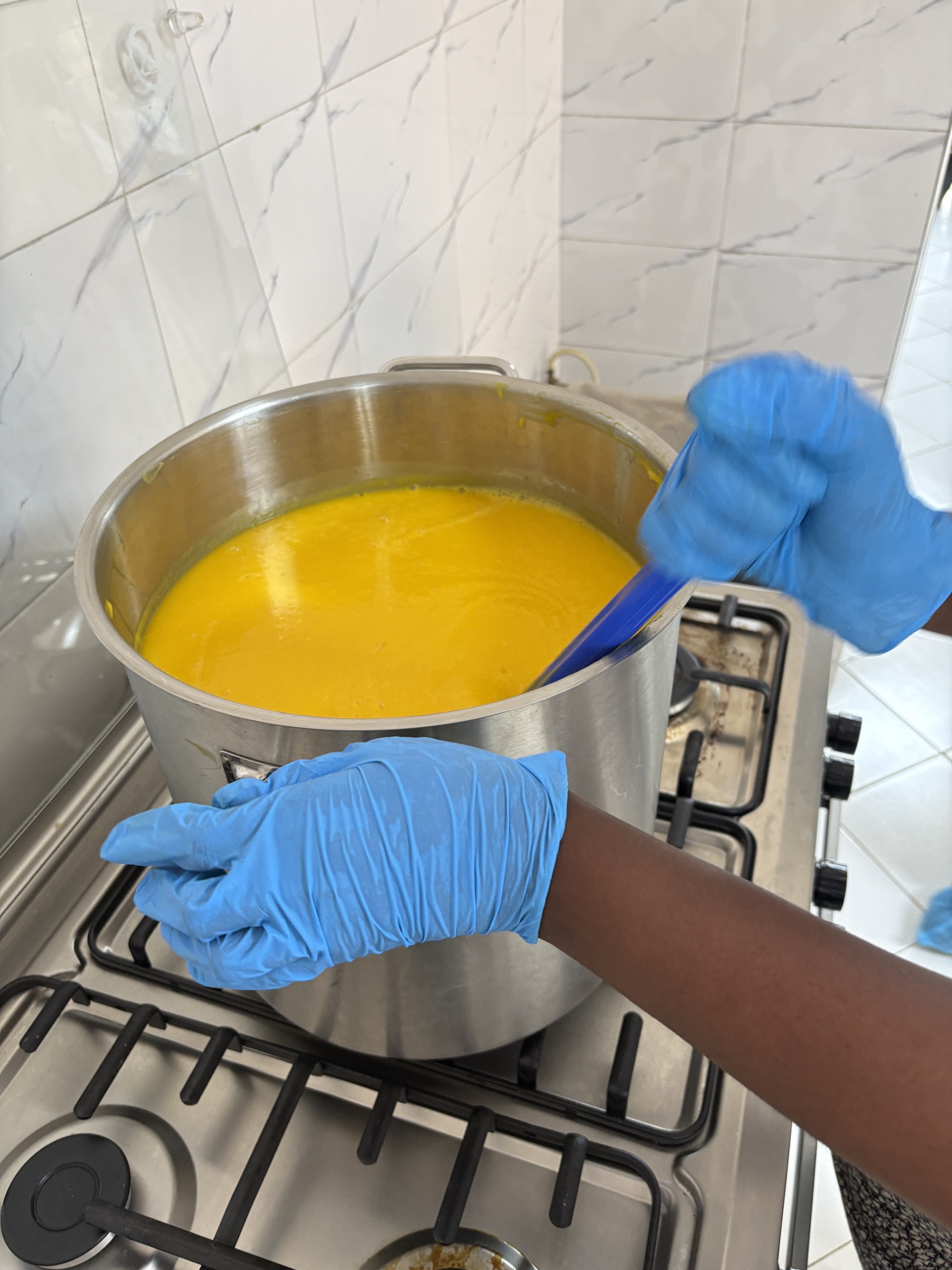
Turn fruit whose price collapses at harvest into a product that sells all year.
| Component | Content |
|---|---|
| Process | Washing, cutting, heat treatment, vacuum packing and freezing |
| Hygiene | One-way flow. Raw material and finished product never cross |
| Power supply | Solar panels and batteries installed on the site |
| Training | Training of operators in operation and hygiene is included |
In operation: Site B, for mangoes. As a pilot project of Japan’s Ministry of Agriculture, Forestry and Fisheries (MAFF), SUCRECUBE Japon turns harvested mangoes into purée and freezes it together with the women’s group GIE DIAMI SANDIARA. The products are being promoted in Japan and France, and sample shipments to Japan have begun.
For whom: farmers’ cooperatives, women’s groups, processors, international organisations, government projects
Request a quoteRequest a site visit
KIOSK (electricity and connectivity point)
A small building with electricity and connectivity, in a village that has neither.
| Component | Content |
|---|---|
| Building | A small building with electricity and connectivity |
| Uses | Phone charging, printing, local information, small retail |
| Power supply | Solar panels and batteries installed on the site |
In operation: Site A. The first users were secondary school students from nearby.
For whom: local authorities, farmers’ cooperatives, markets, international organisations
Request a quoteRequest a site visit
Remote monitoring and maintenance after delivery are described on the Maintenance and operations page.
What the two sites have shown
| Site A | Site B | |
|---|---|---|
| Solar | 21 kW | 35 kW |
| Cold storage | 22 m³ | 60 m³ |
| Power supply | Solar and batteries only, no grid connection | Same |
| Operation | 24 hours (design) | 24 hours (design) |
| Use | Chilled storage, KIOSK | Chilled and frozen storage, processing |
Outdoor temperatures in West Africa exceed 40 degrees on some days. In those conditions, Site A keeps a 22 m³ cold room cool on about 15 kWh a day. This comes from heavy insulation combined with a Daikin inverter refrigeration unit. Site B does more than keep the fruit cold. It gives the fruit a form that can travel. The range above is made up of the configurations proven at these two sites.
The solar cold container pilot in Sandiara is supported by a grant from the MOL Blue Ocean Fund (Mitsui O.S.K. Lines).
What comes with every product
A facility does not work if only the box is delivered. SUCRECUBE Japon delivers everything needed to keep it running.
| Component | Content |
|---|---|
| Power generation and storage | Solar panels, batteries, inverters. Capacity is sized to the use of the site |
| Remote monitoring | Temperature and solar output are watched from Japan and Dakar. If something goes wrong, a local technician goes to the site |
| Training | Operators are trained in operation and hygiene |
Design principles
Do not waste electricity. The less the cold room consumes, the smaller the panels and batteries can be. Site A’s “22 m³ on 15 kWh a day” is the result of choices made on insulation and equipment.
Solar is not only for cooling. Our sites have more solar capacity than the cold room needs. The surplus daytime electricity runs the processing machines and the KIOSK. Compared with a cooling-only facility it looks large. The use is different.
Location decides utilisation. A cold room placed in the growing area empties when the harvest ends. Placed at a market, it runs all year. In the growing area, processing adds uses. The location is decided with the client before anything is built.
Who consults us
International organisations and governments consult SUCRECUBE Japon about cold storage sites for farmers’ cooperatives and markets. Japanese companies consult us about pilot projects financed by Japanese public subsidies and about joint ventures with local partners. The size and composition of a site differ from one project to the next, so costs are quoted individually. Combinations with subsidies and public funds are examined from the design stage.
Steps
- Consultation. Use, location, the produce concerned and the capacity needed
- Site survey. Sunlight, location, roads, water and nearby markets
- Design and quotation. Power generation, cold storage, processing and the KIOSK
- Construction. Containers and equipment are received in Senegal and installed by local technicians
- Training and handover. Operators are trained in operation and hygiene
- Operational support. Remote monitoring and maintenance continue
The two Sandiara sites can be visited. Requests for a site visit go through the contact form.
We are looking for partners. Companies considering a joint project or a field pilot with this product are welcome to contact us.